Get More Out of FishRec: A Better Way to Explore Utah Fishing
By Tiafau Purcell
FishRec isn't designed to tell you exactly where to stand and cast. It's designed to give you the information you need to figure that out for yourself.
Search for a species you've never caught. Find a lake you've never visited. Learn what's in the water before making the drive. Check access, conditions and fishing recommendations, or work toward a challenge that gives you a reason to explore somewhere new. FishRec brings those pieces together so you can spend less time searching across different sources and more time figuring out where you want to fish next.

Start with the FishRec Map
Sometimes you know exactly where you want to fish. Other times, you just want to see what's out there. The FishRec map was built for both.
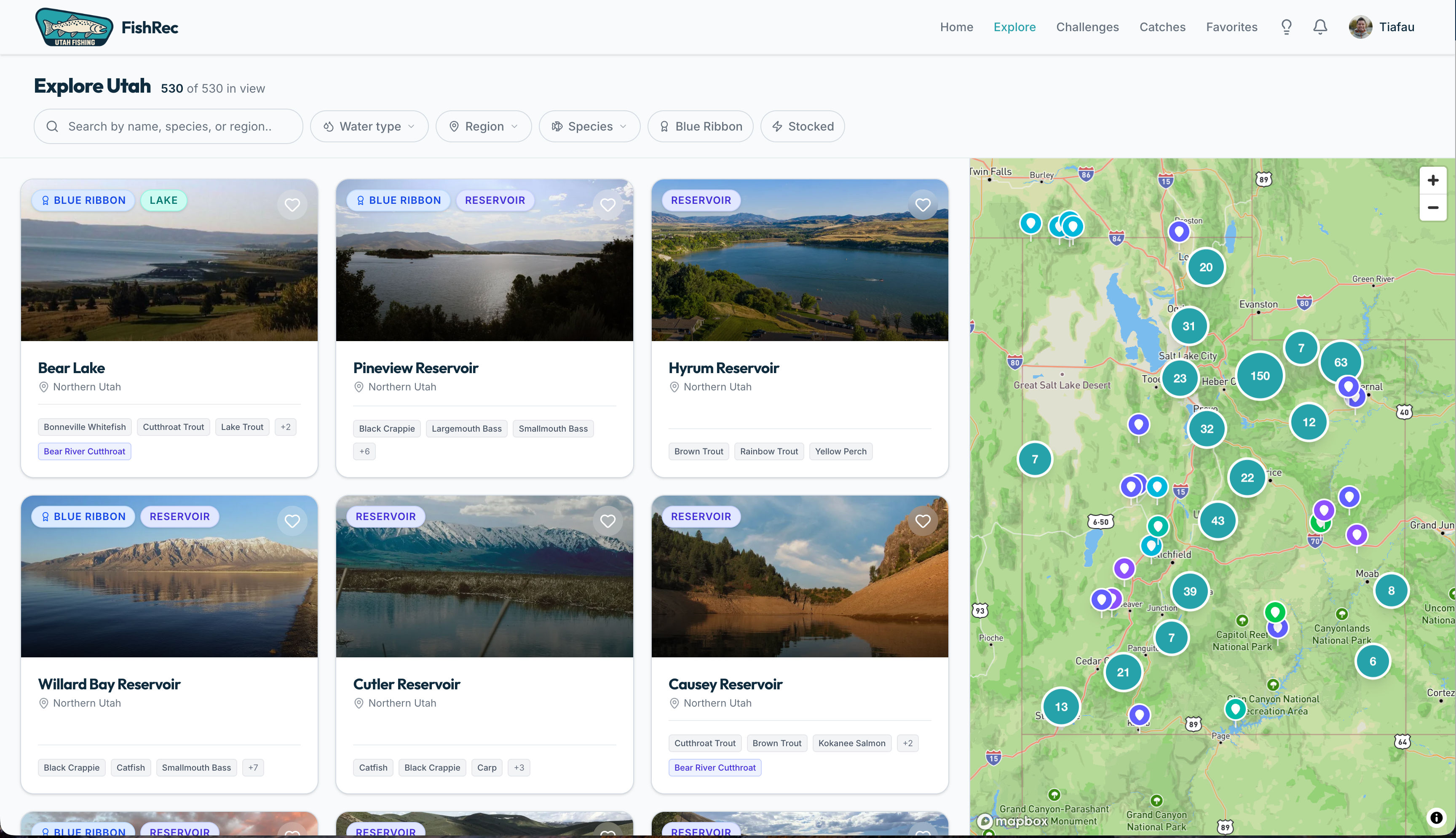
You can explore fishing waters across Utah geographically rather than starting with a list of familiar names. Zoom into a part of the state you're interested in and you may find reservoirs, rivers, community fisheries and mountain lakes you didn't know were there.
That's particularly useful when you're traveling somewhere new or trying to break out of the habit of fishing the same few places. Instead of asking, "Where should I fish?" you can start with a different question: What's around here? From there, FishRec can help narrow things down.
Find Waters by the Species You Want to Catch
Sometimes the destination isn't the goal. The species is. FishRec lets you explore waters based on the species associated with them. If you want to catch Brook Trout, Arctic Grayling, Tiger Trout or one of Utah's native Cutthroat Trout, you can start with the species and see known waters where that fish occurs. That makes FishRec useful for anglers trying to catch a new species, complete a fishing challenge or simply change things up.
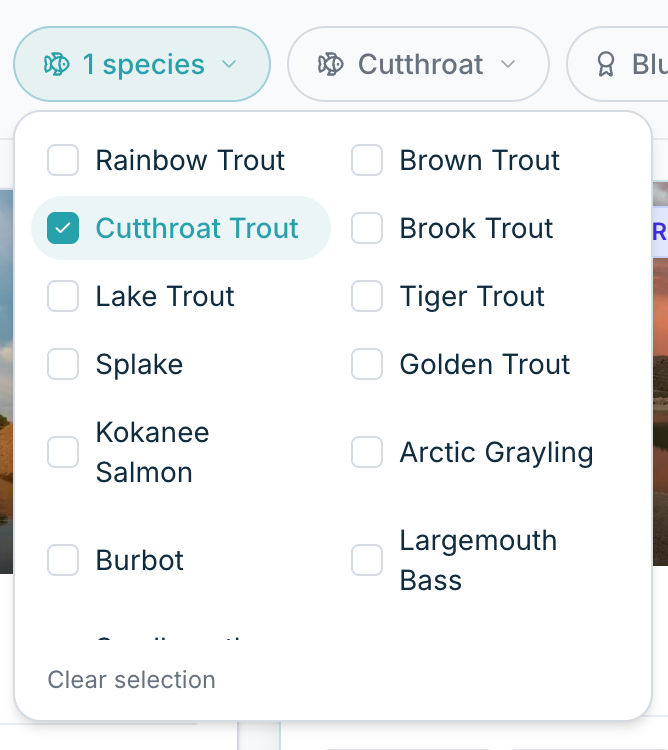
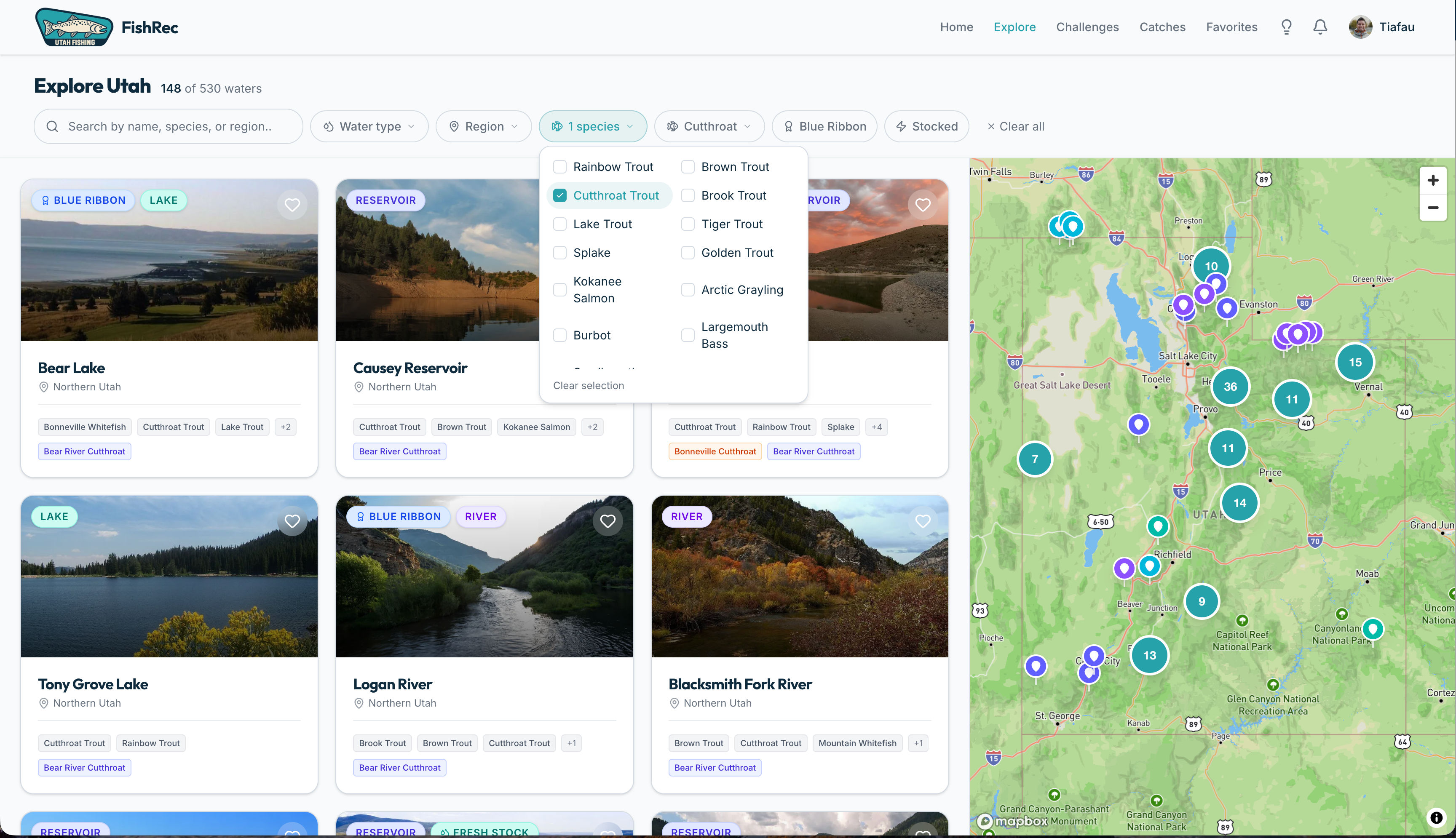
It can also reveal just how varied Utah fishing really is. A species you associate with one particular reservoir or mountain range may have opportunities elsewhere that you've never considered. Species information isn't meant to guarantee what you'll catch on a particular day. Fisheries change, populations fluctuate and fish have an annoying habit of ignoring our plans.
But knowing which waters are associated with the fish you're looking for gives you a much better place to start.
Learn About a Water Before You Go
Finding an interesting blue spot on Google maps can work. But you miss the details of that water. Open a water in FishRec and the water detail page brings together information that can help you decide whether it's the right trip. Depending on the water and available information, that can include the species found there, access and location information, fishing conditions and recommendations for how to approach the fishery.
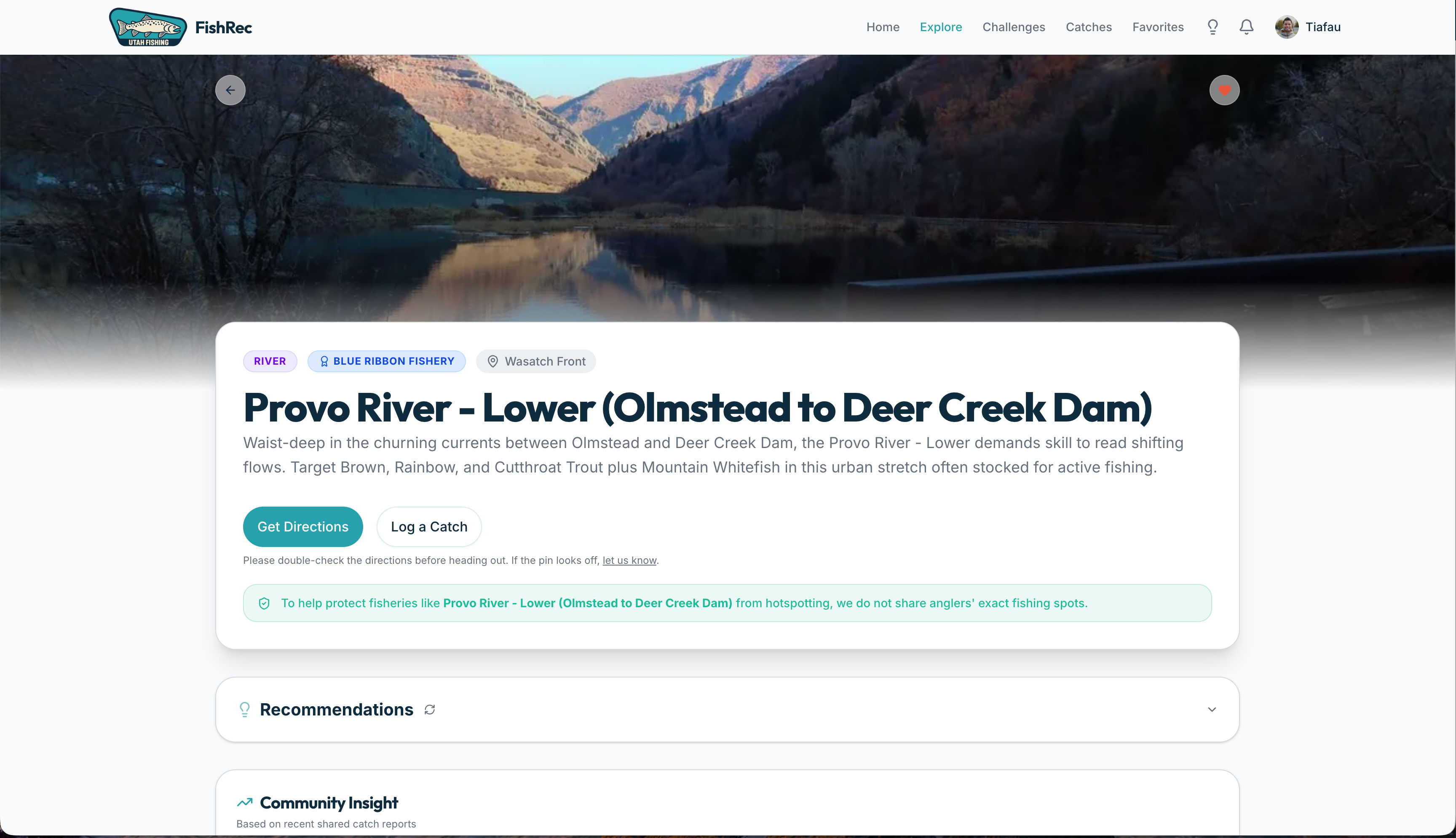
That's especially useful when comparing several possible destinations. Maybe one water is easy to reach but another requires a hike. Maybe you're looking for a family-friendly trip rather than a backcountry lake. Maybe you're deciding between chasing trout in a river and spending the afternoon on a reservoir. The goal isn't simply to collect information about Utah's waters. It's to make that information useful when you're actually deciding where to go.
Fishing conditions aren't static. Water temperatures change, reservoir levels move, roads and trails become accessible or inaccessible, fish are stocked, and seasons change what fish are doing and where anglers are likely to find them.
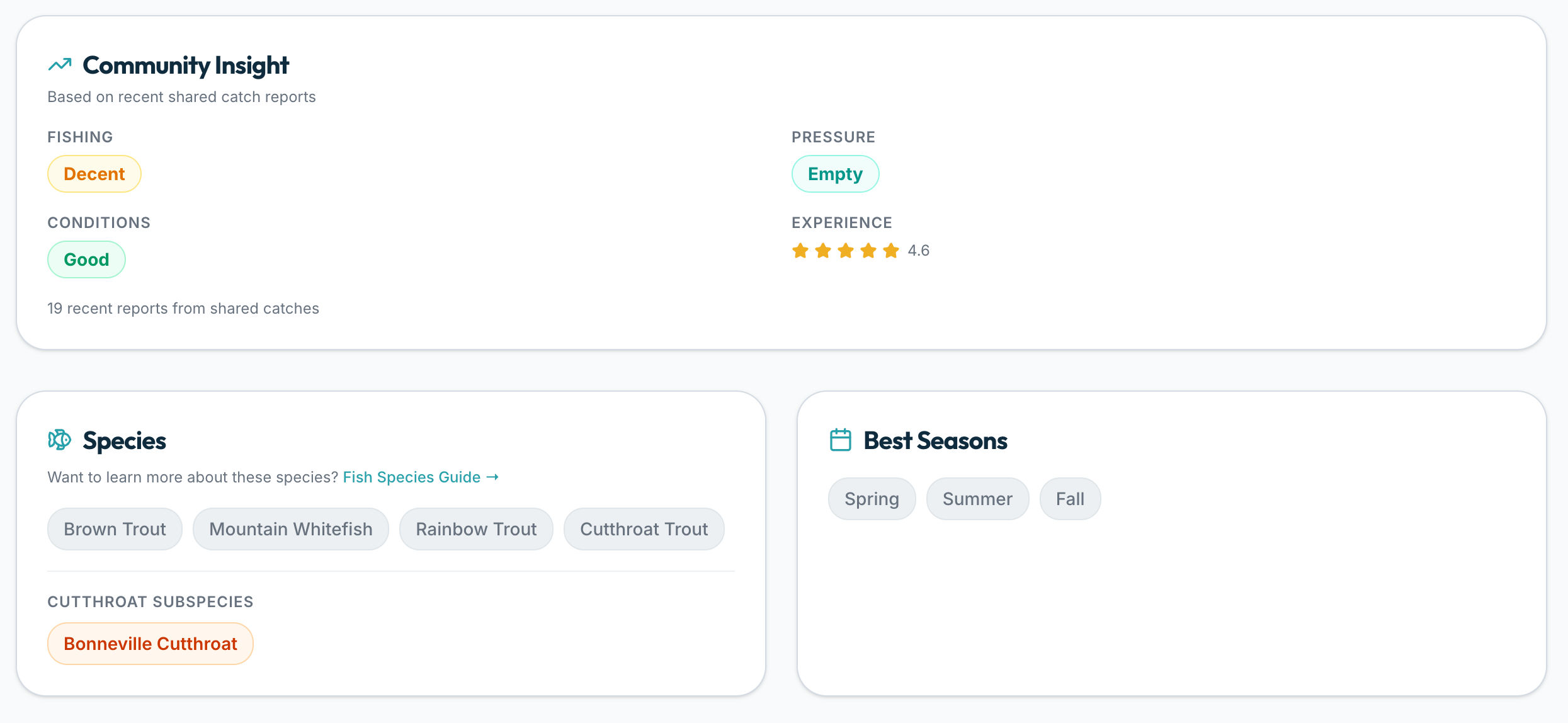
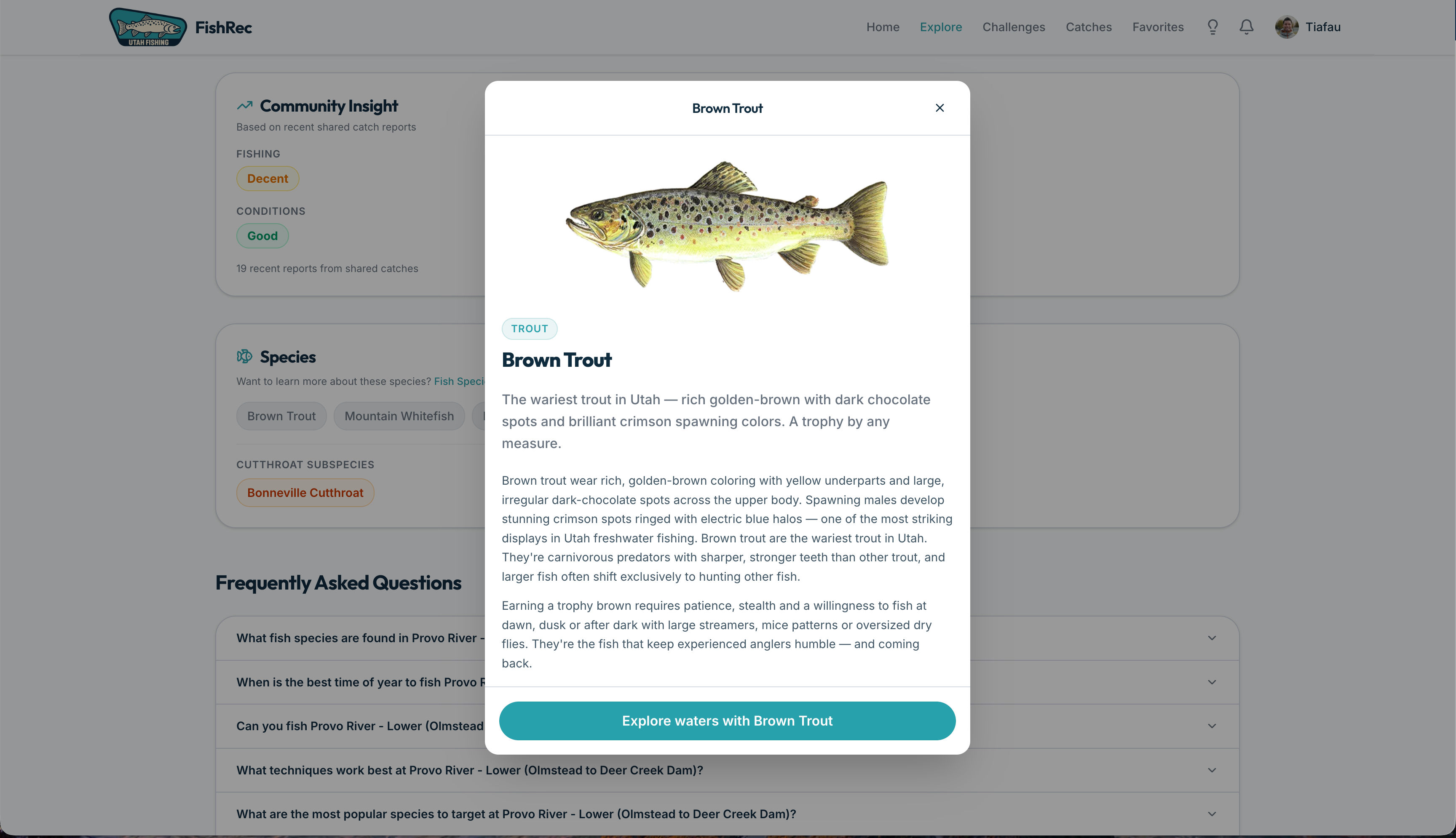
FishRec is being built around the idea that useful fishing information should be connected to the water you're researching rather than scattered across a dozen unrelated places. The more context you have before leaving home, the easier it becomes to decide whether a particular trip makes sense—or whether you should save that water for another day.
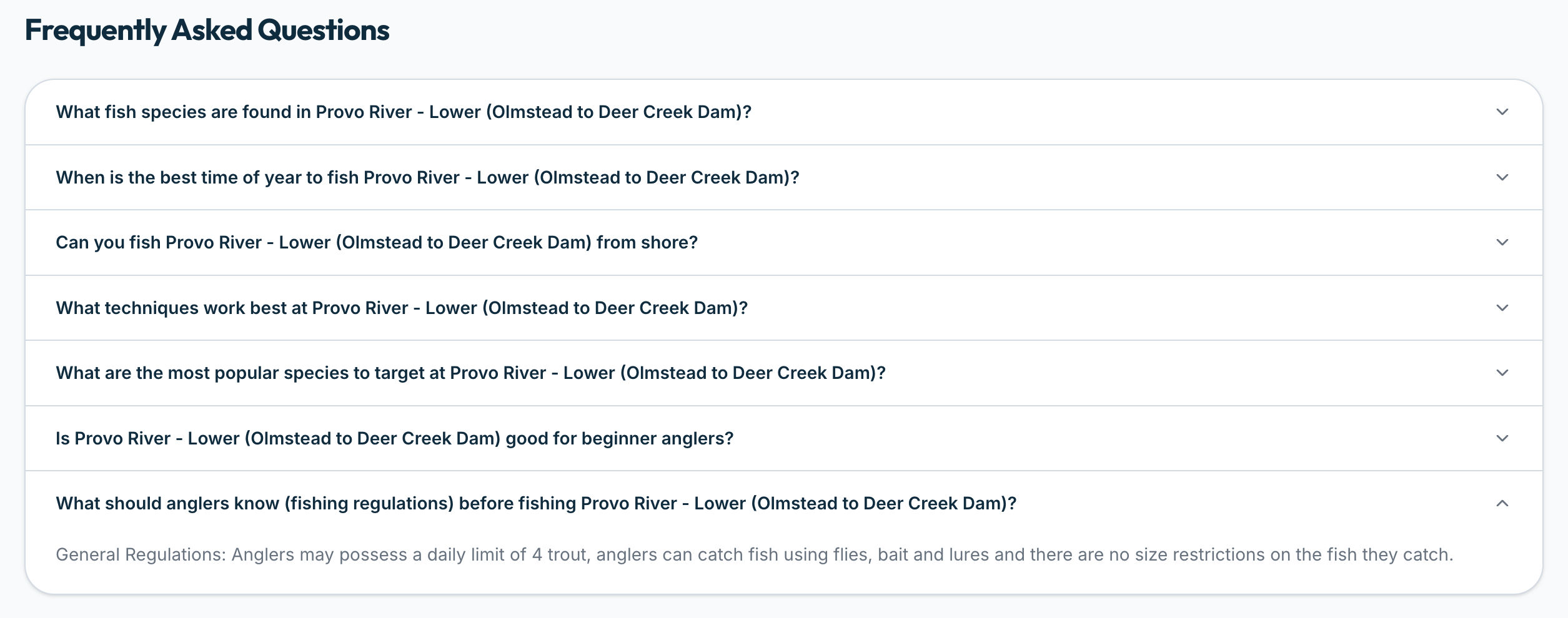
Get Ideas for How to Fish Utah Waters
Knowing fish are in a lake doesn't necessarily tell you how to catch them. FishRec water pages can include recommendations for techniques, gear and the types of areas that may be worth focusing on once you arrive.
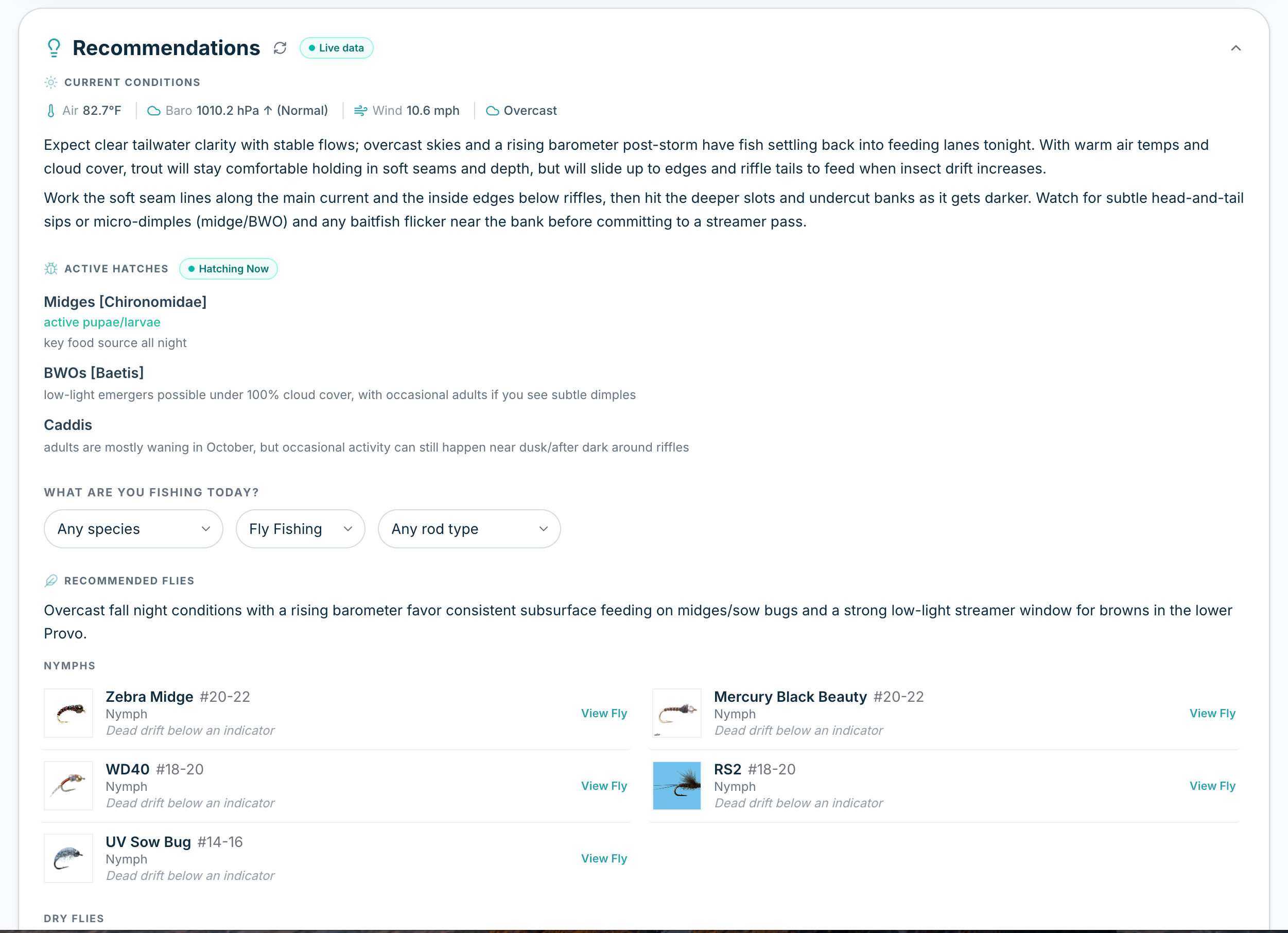
On a lake, that could mean looking around rocky shorelines, drop-offs, inlet or outlet areas, shallow shelves or places where wind is concentrating food. On moving water, it might mean paying attention to seams, deeper runs, current breaks or other areas where fish can feed without constantly fighting the current.
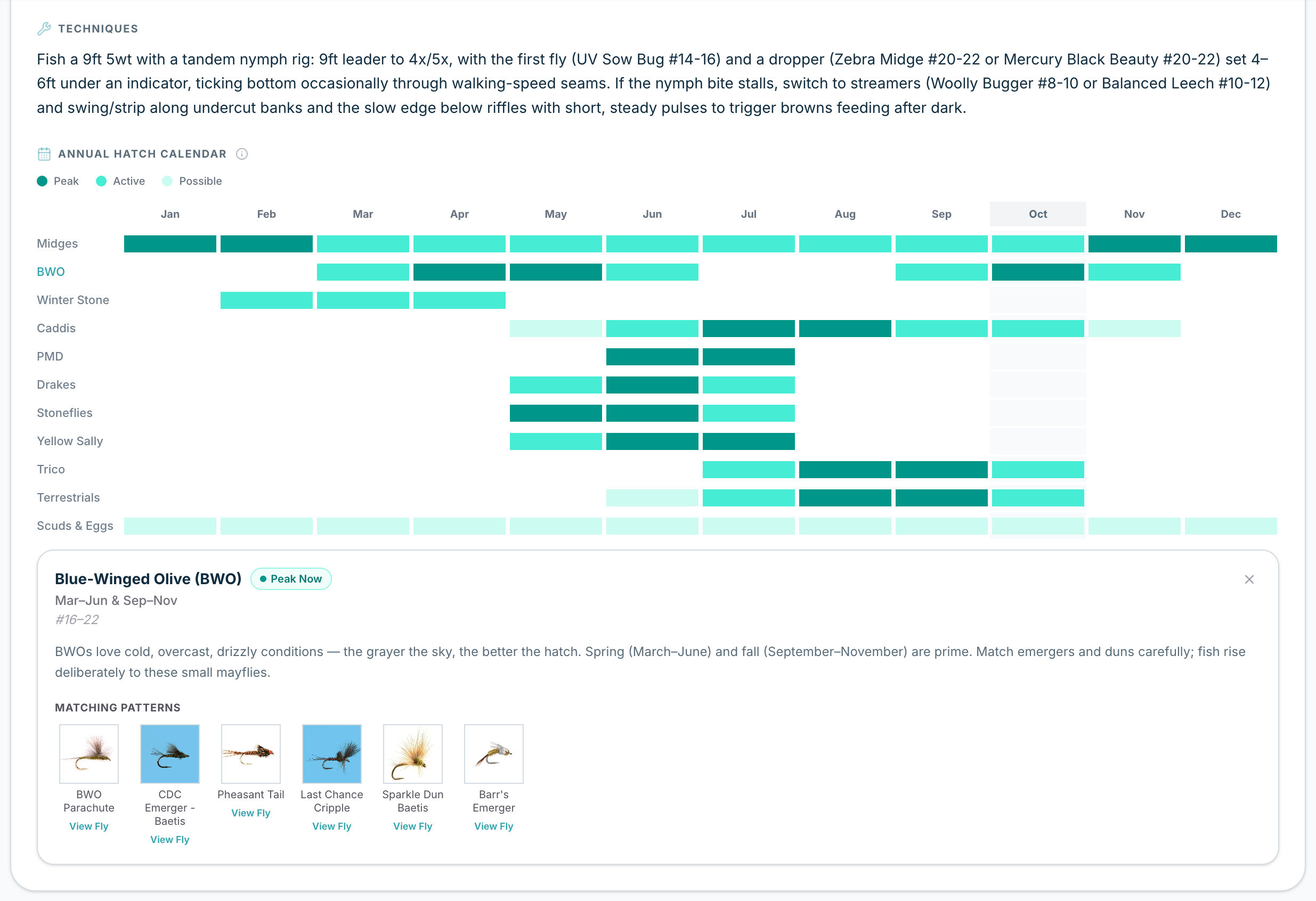
These aren't secret spots. They're clues. FishRec isn't going to give you a GPS pin showing exactly where somebody caught a trout last Tuesday. We want to help you understand the water well enough to start making those decisions yourself. That's an important difference.
Turn Exploring Into a Challenge
Sometimes you need a reason to fish somewhere new. FishRec Challenges are designed to provide one.
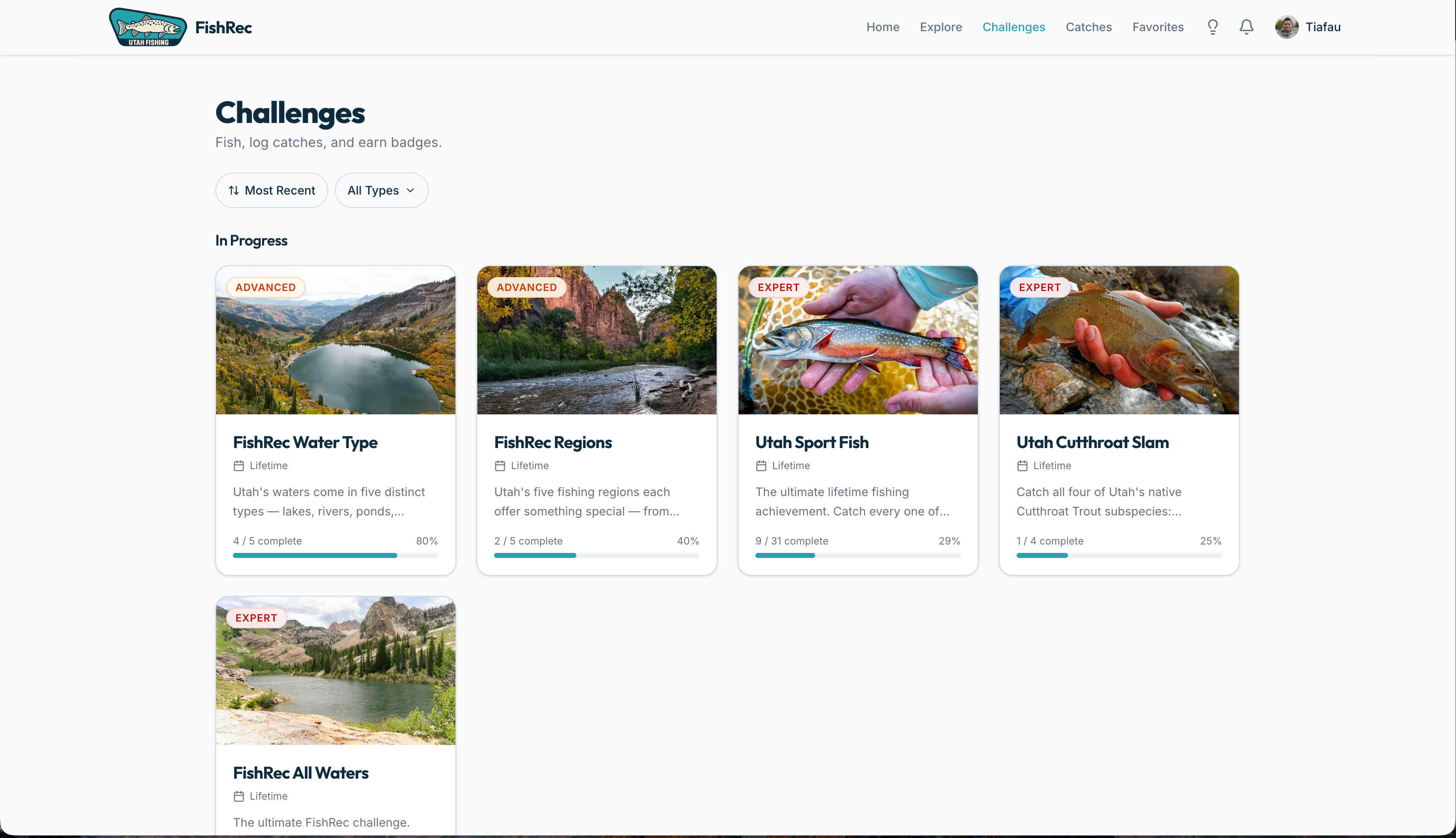
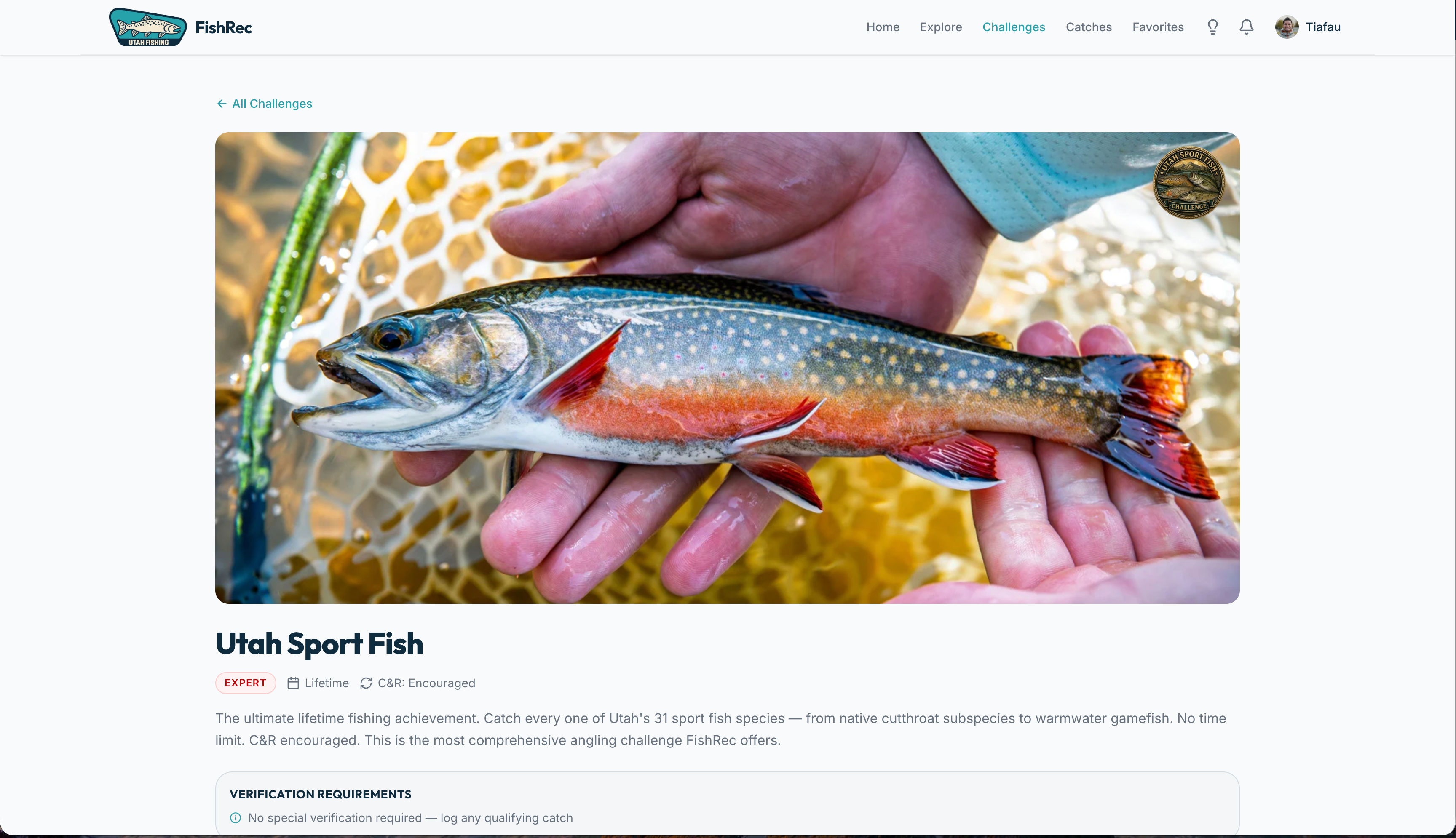
Instead of always measuring fishing by the biggest fish or the most fish, a challenge can give you a different objective: catch certain species, explore different waters or work toward completing a larger fishing goal over time. That changes the way you look at the map.
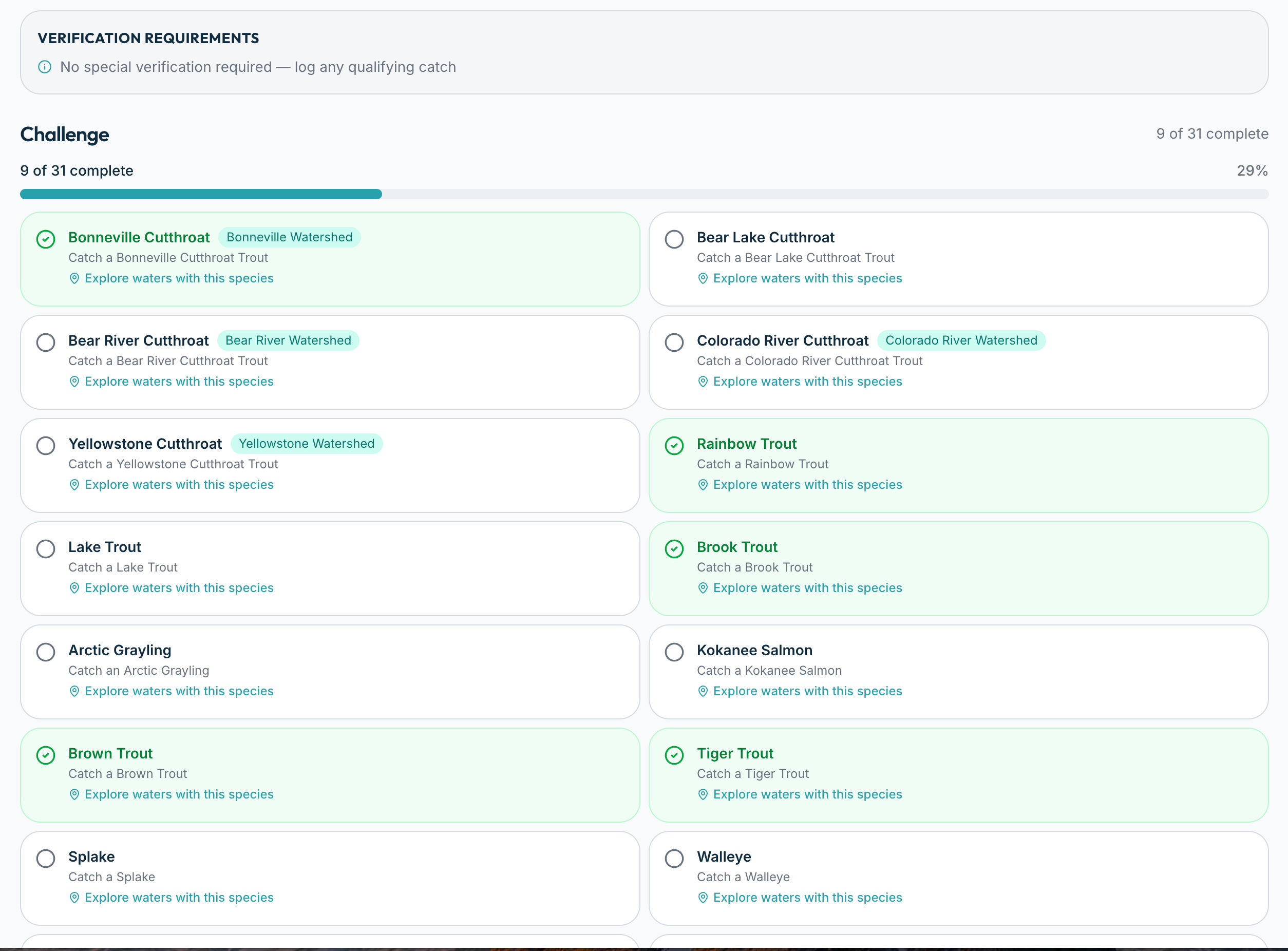
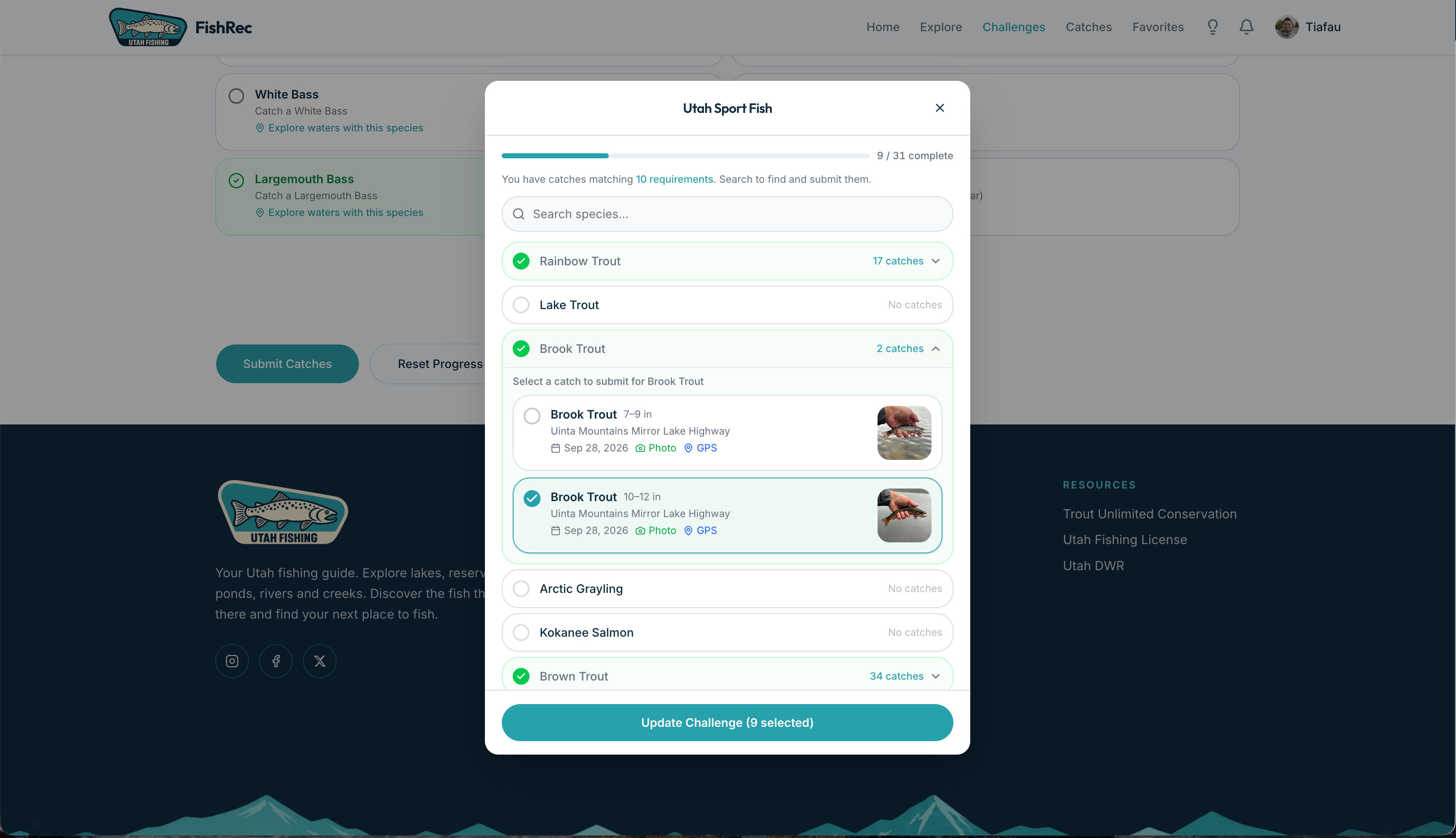
A lake you might normally drive past suddenly becomes interesting because it holds a species you need. A small stream might become part of a weekend trip. An unfamiliar part of Utah gives you a reason to start researching. And because challenges can take time to complete, they turn fishing into something bigger than a single outing.
Keep Track of What You've Caught
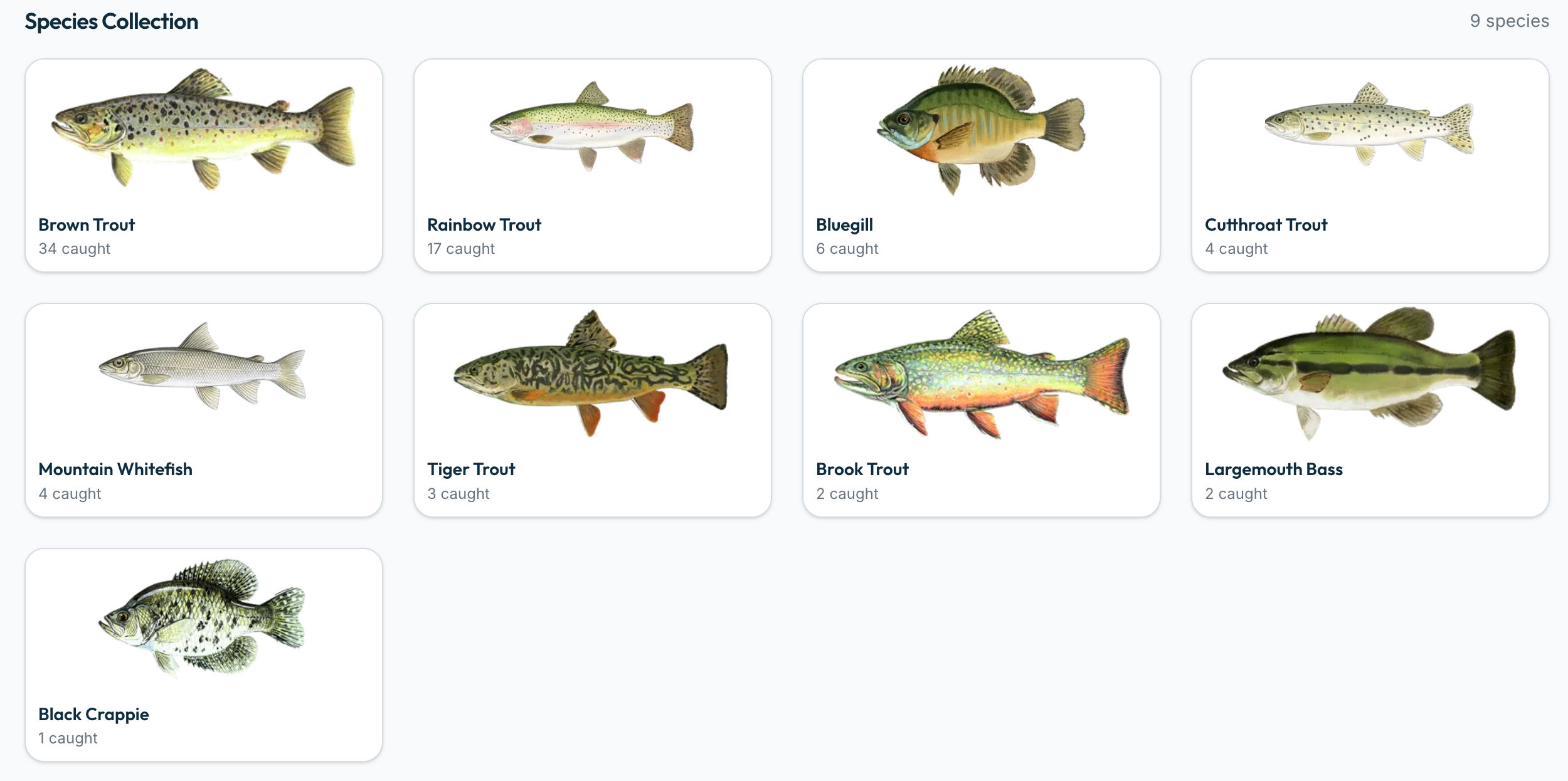
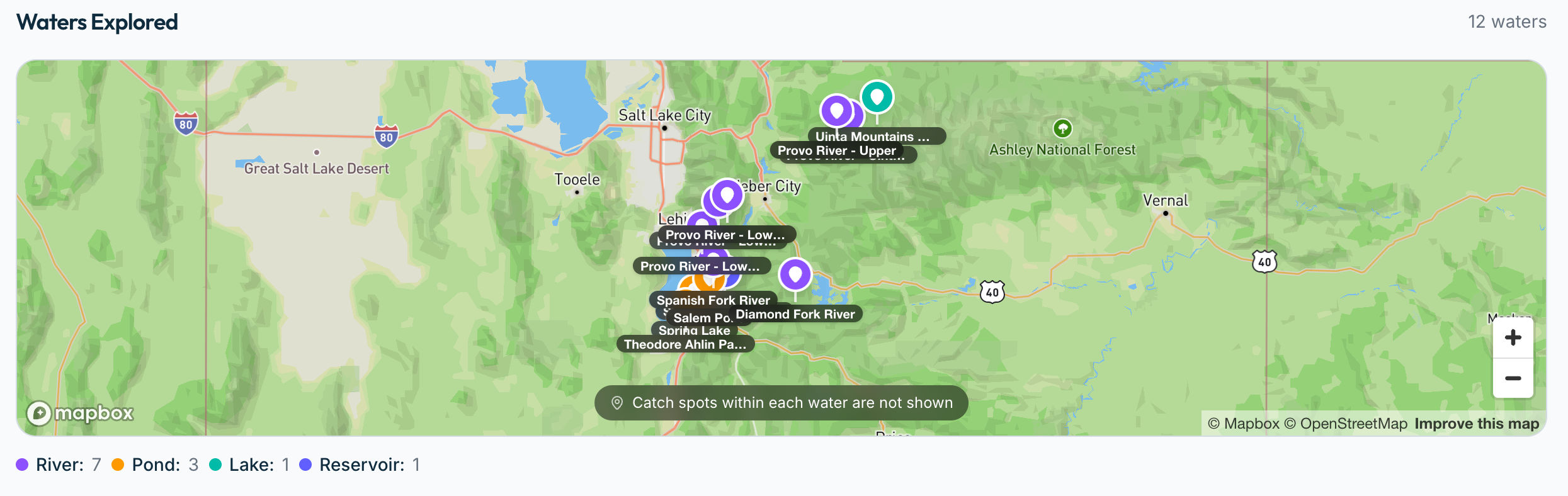
Part of becoming a better angler is remembering what worked. Logging catches gives you a record of the fish you've caught and the places you've explored. Over time, those records become more useful than they may seem on the day you enter them. You start noticing patterns.
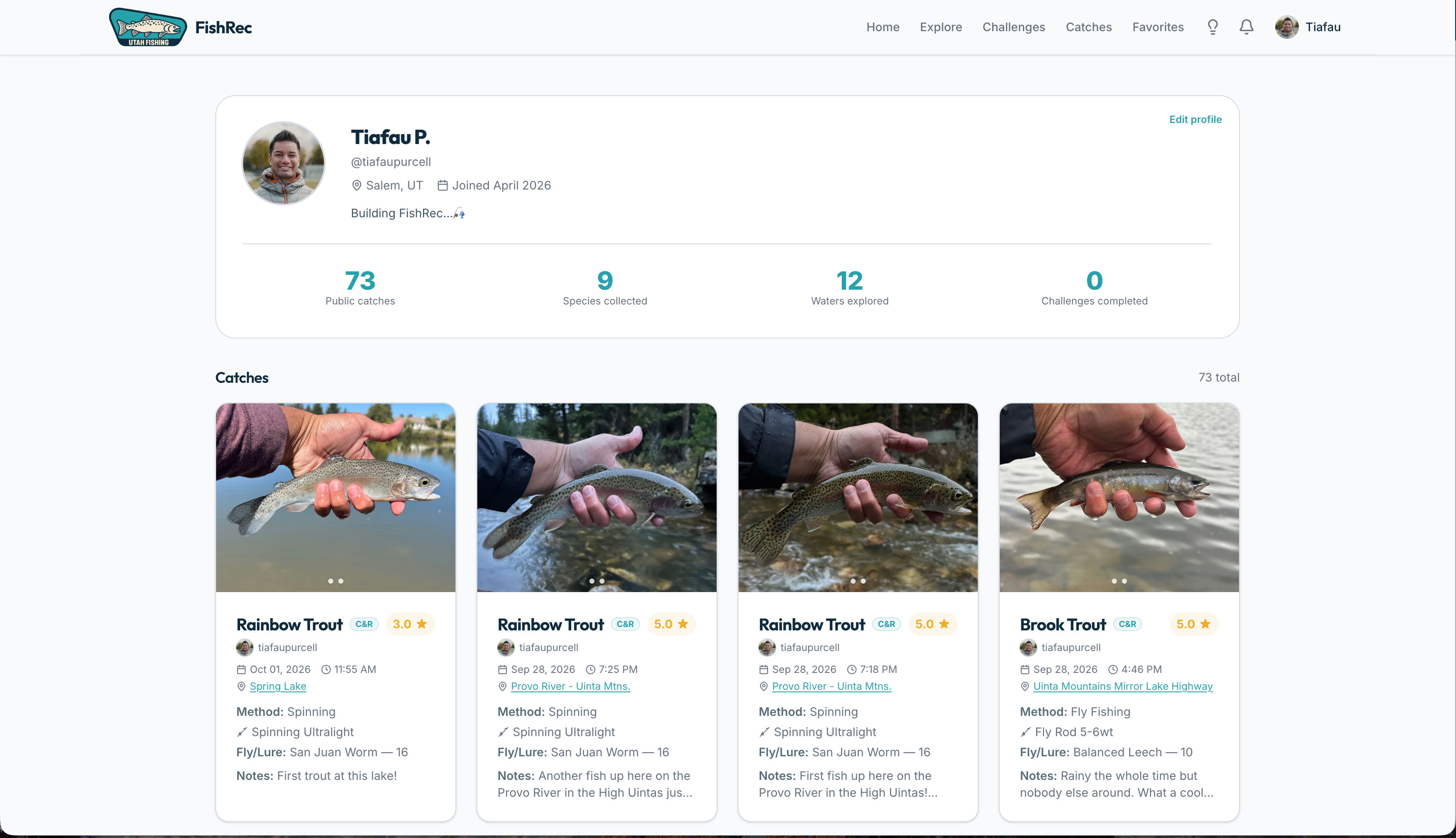
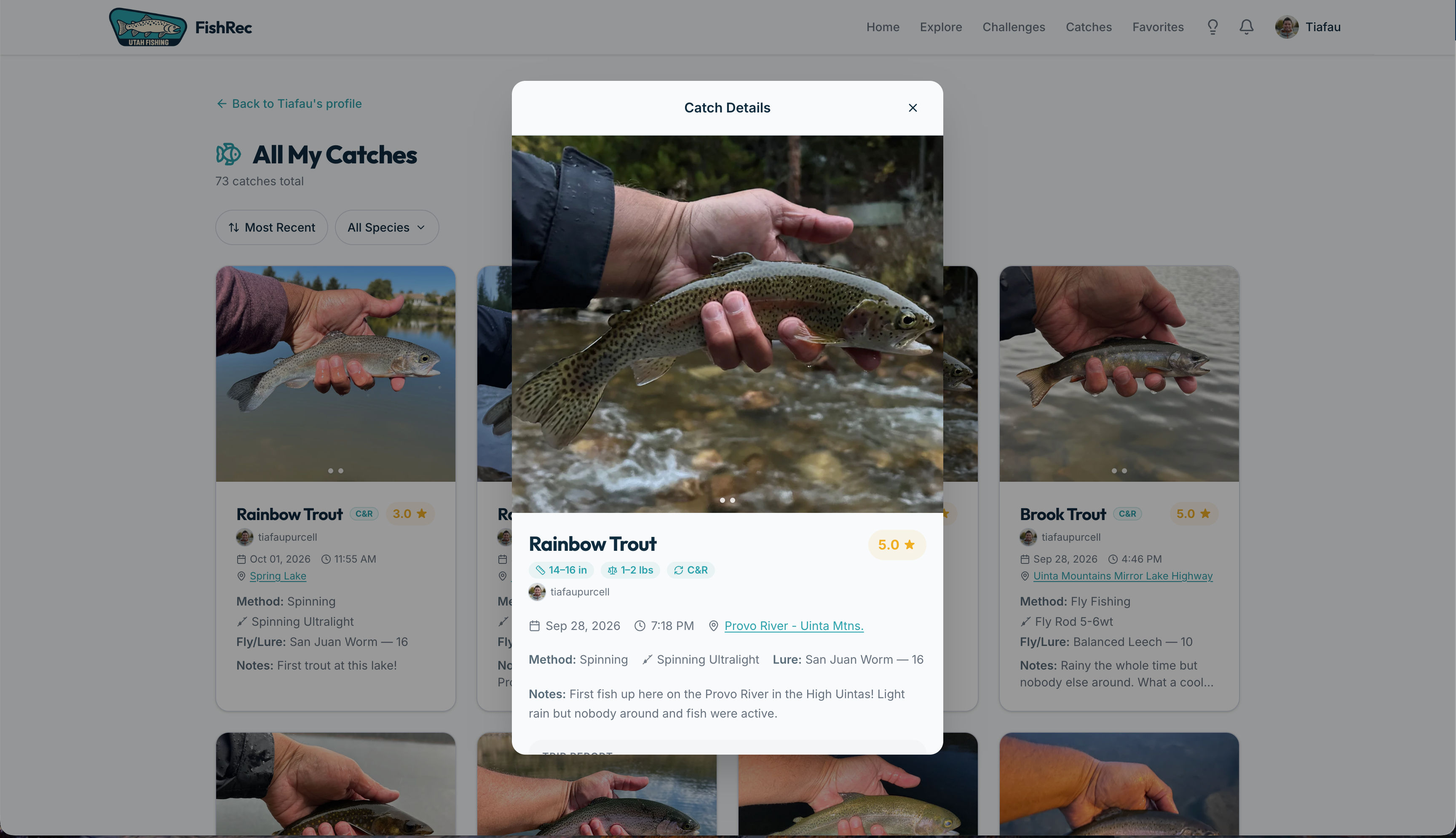
When did you catch that fish? What water were you on? What species have you caught most often? Which parts of Utah have you explored, and which ones haven't you? A catch log isn't only a record of fish. It's a record of your fishing.
Use the Journal to Become a Better Angler
You're reading one of the other pieces of the FishRec Journal right now. The FishRec Journal exists because finding water is only part of fishing.
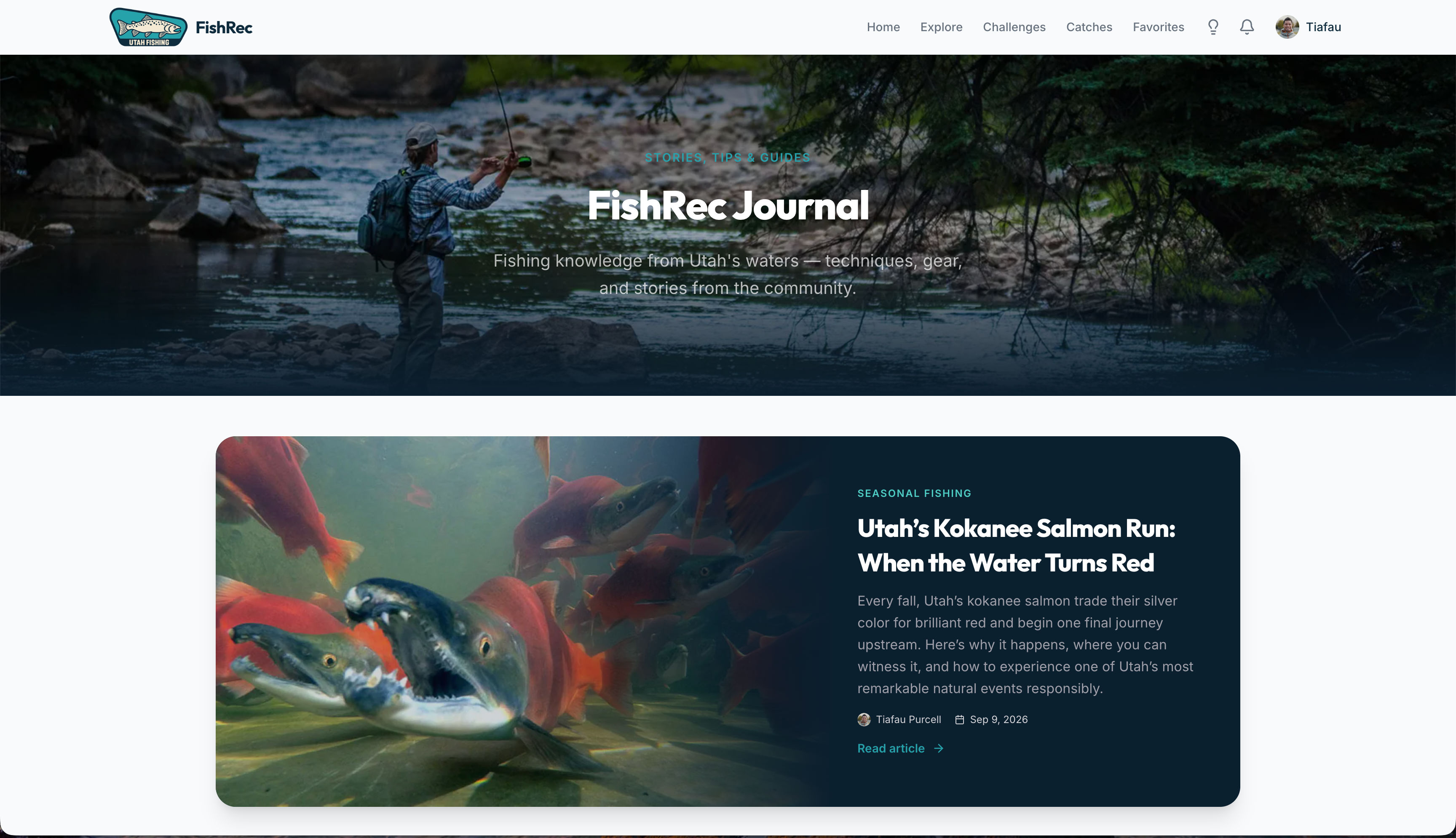
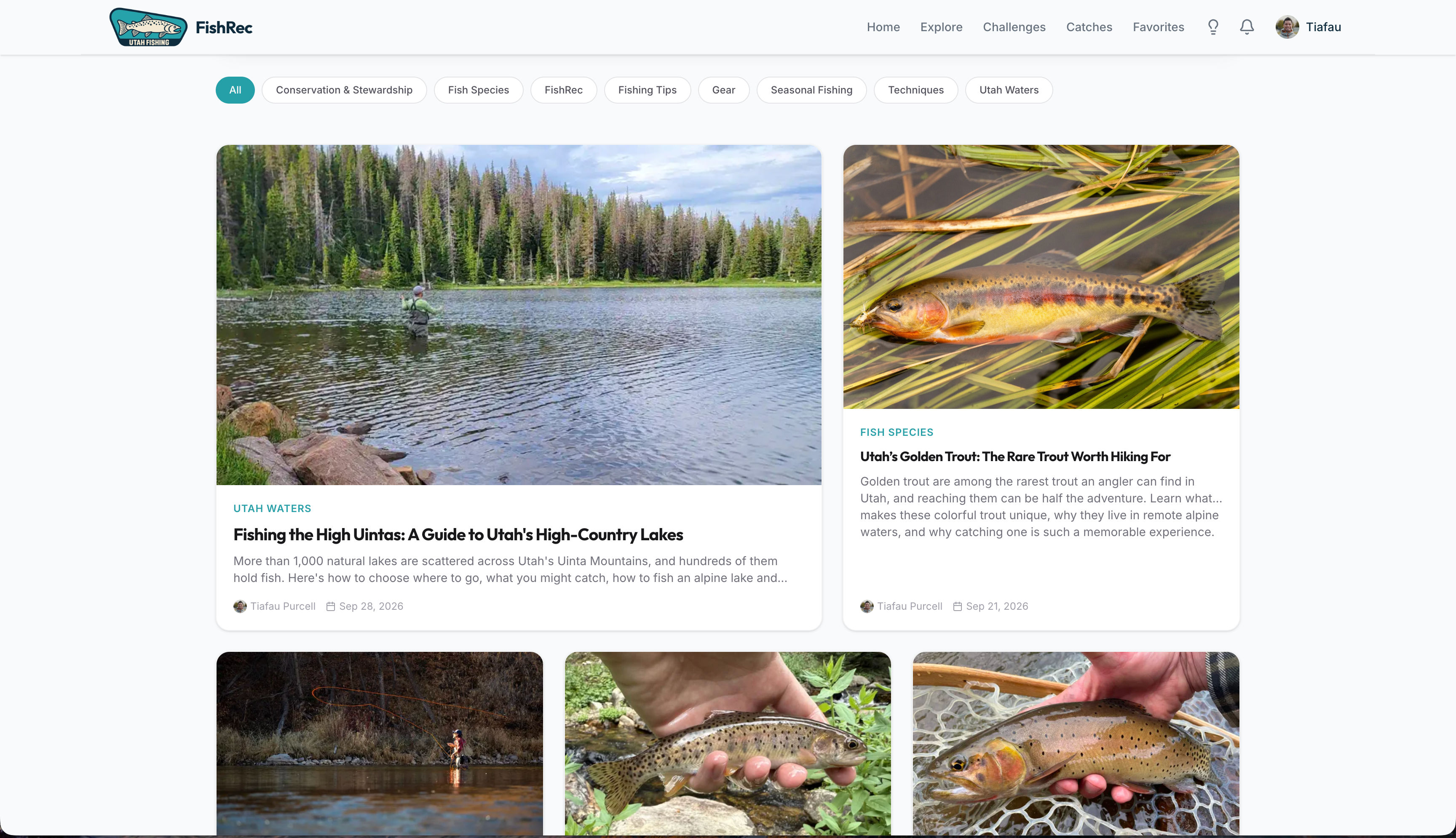
We want FishRec to help anglers understand fish species, learn techniques, explore Utah waters, prepare for seasonal changes, make better decisions about gear and understand why conservation matters. A water page might help you decide where to spend Saturday.
An article about reading a river, understanding trout behavior or fishing an alpine lake might help you catch fish there. Those two sides of FishRec are meant to work together.
Discover More Than the Famous Waters
Utah has some fishing destinations almost everyone recognizes––Provo River, Weber River, Scofield Reservoir, Strawberry Reservoir, Deer Creek Reservoir. They're popular for good reason but they're only a small part of what's available.
One of the biggest ideas behind FishRec is making the rest of Utah's fishing waters easier to discover. That includes small reservoirs, community ponds, rivers, streams and mountain lakes that can easily disappear among the thousands of blue lines and dots on a map.
And FishRec just got considerably bigger. Today, we added 209 new Utah fishing waters to FishRec, expanding the app from 321 waters to 530 in a single release. That's about a 65% increase in the number of waters available to explore, but it's only part of the expansion we're working on. We're continuing to build out the FishRec water database, with more than 1,000 Utah waters ultimately planned for the app. That means hundreds of additional fishing opportunities still to come, from recognizable fisheries to smaller waters that many anglers may have never considered exploring.
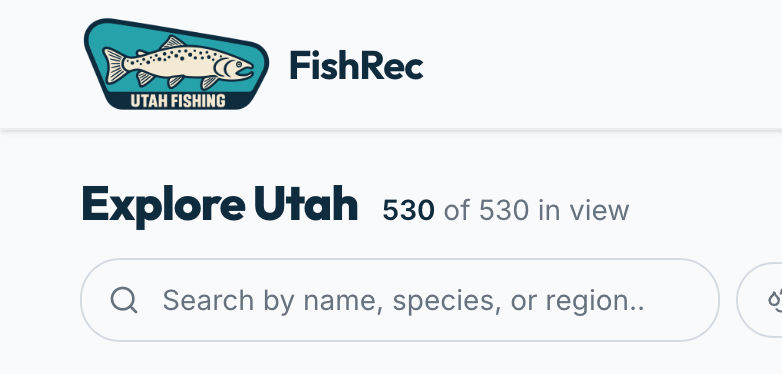
We're taking our time with that work because adding another marker to a map isn't enough. We want the information connected to each water to be useful and supported by reliable sources, including accurate locations, known fish species, stocking information where available, access information and other details that can help anglers decide where to go.
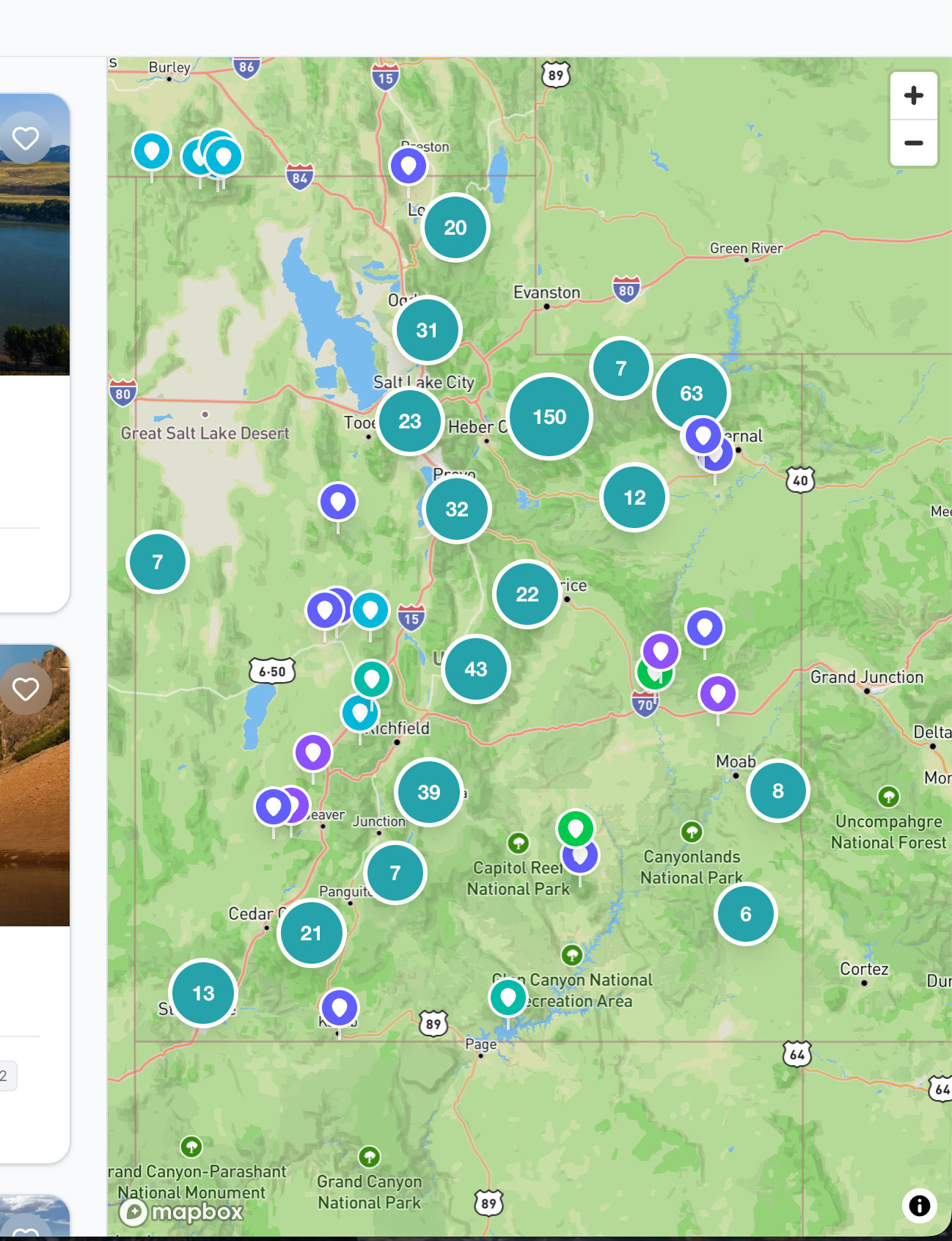
For anglers, that means the FishRec map you open today already has a lot more to explore than it did yesterday—and there is much more still to come.
Explore More. Protect What We Have.
Adding more waters to FishRec comes with a responsibility we take seriously. We want anglers to discover more of Utah. We also want those waters to be healthy long after any of us have stopped fishing them. Those two ideas don't have to work against each other.
We don't believe the names of public waters should be treated like secrets. Utah's lakes, reservoirs, rivers, creeks and ponds are public resources, and there are incredible fishing opportunities spread across the state. Helping anglers discover those opportunities can also help distribute fishing pressure rather than continually sending everyone to the same handful of well-known fisheries.
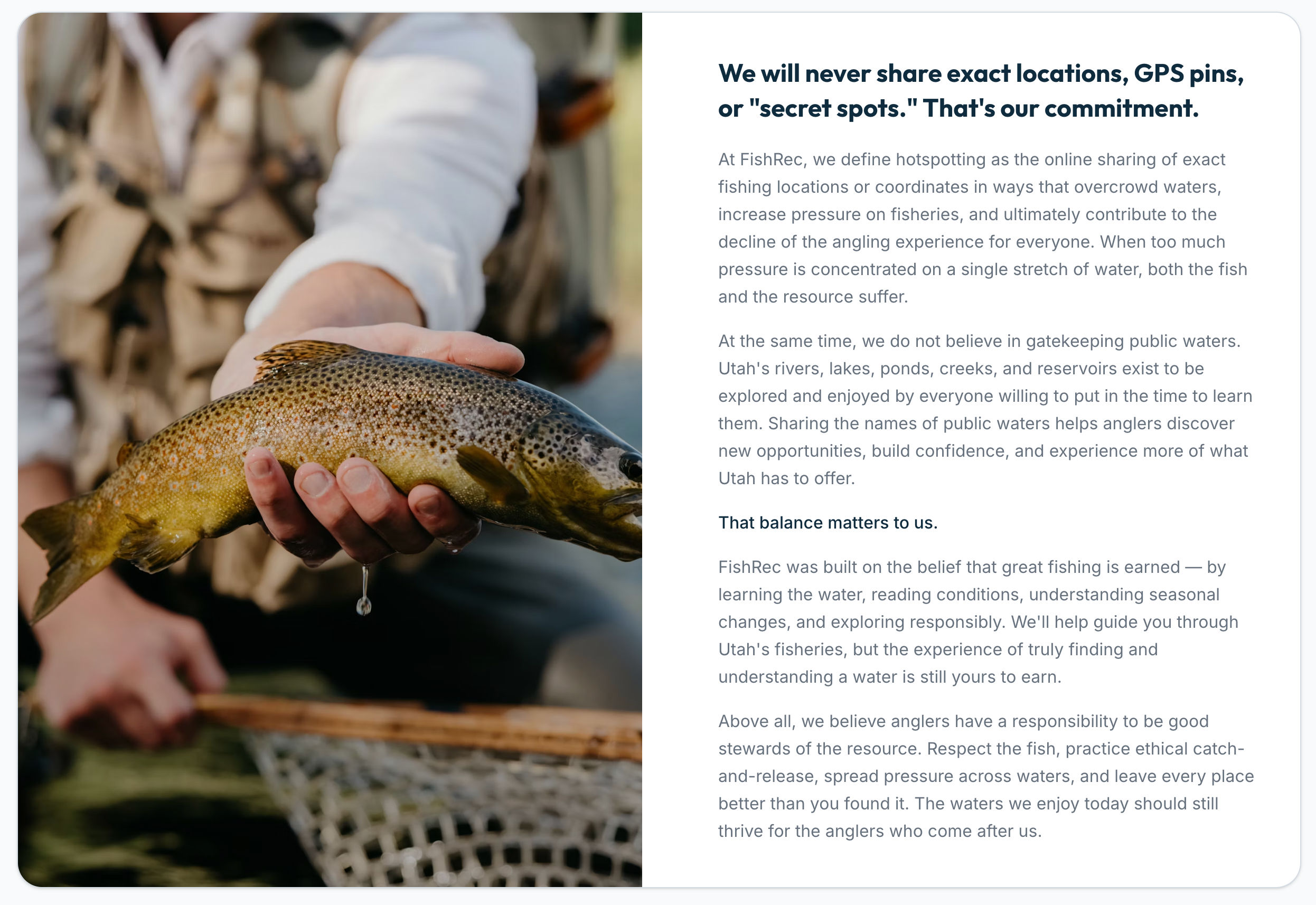
But there's a big difference between helping someone discover a public water and telling thousands of people exactly where to catch fish once they get there. That's why FishRec doesn't publish exact productive GPS coordinates, somebody's secret hole or the precise location of a recent catch. We'll help you find the water, understand the fishery and learn how to approach it. Finding the fish is still part of fishing.
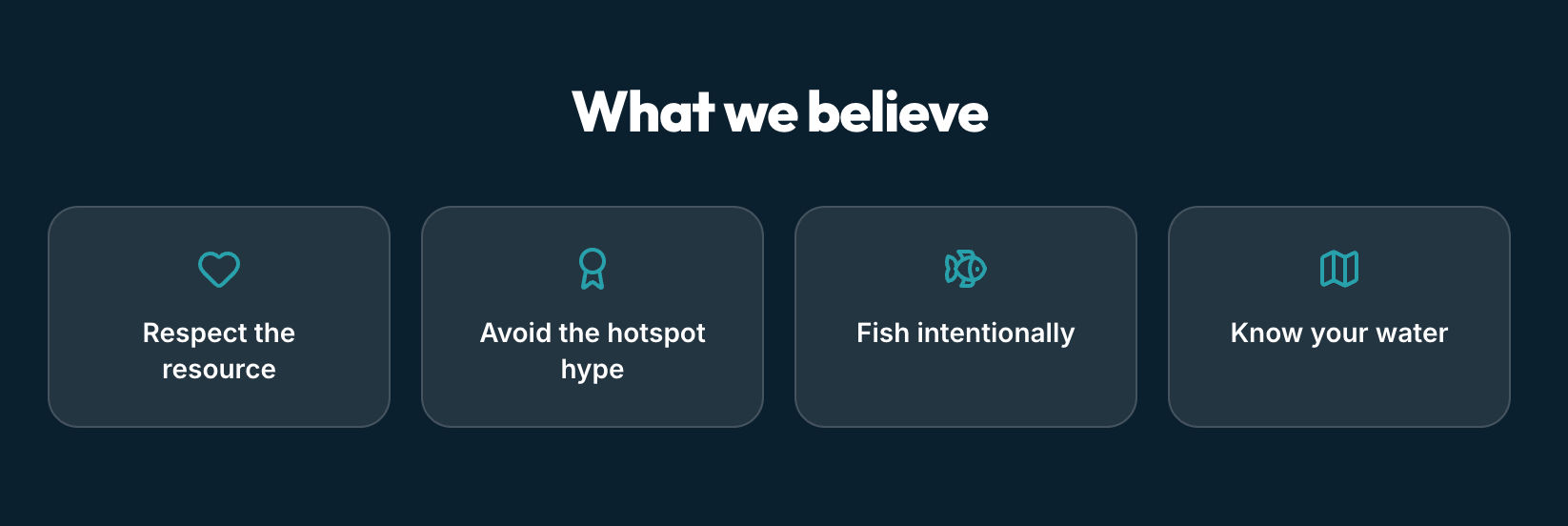
That balance is central to what we believe at FishRec: respect the resource, avoid the hotspot hype, fish intentionally and know your water.
It also means responsibility doesn't end when we close the app and start fishing. Handle fish carefully. Practice ethical catch-and-release when appropriate. Follow regulations. Pack out what you bring in. Don't move fish between waters. Respect habitat and other anglers, and leave the places you visit better than you found them.
Growing FishRec from a few hundred waters to more than 1,000 shouldn't mean more pressure concentrated on fragile fisheries. We hope it does the opposite. We want anglers to realize just how much Utah has to offer, spread out, explore responsibly and become better stewards of the waters they discover.
FishRec can help you find more places to fish. It's up to all of us to help protect them.